

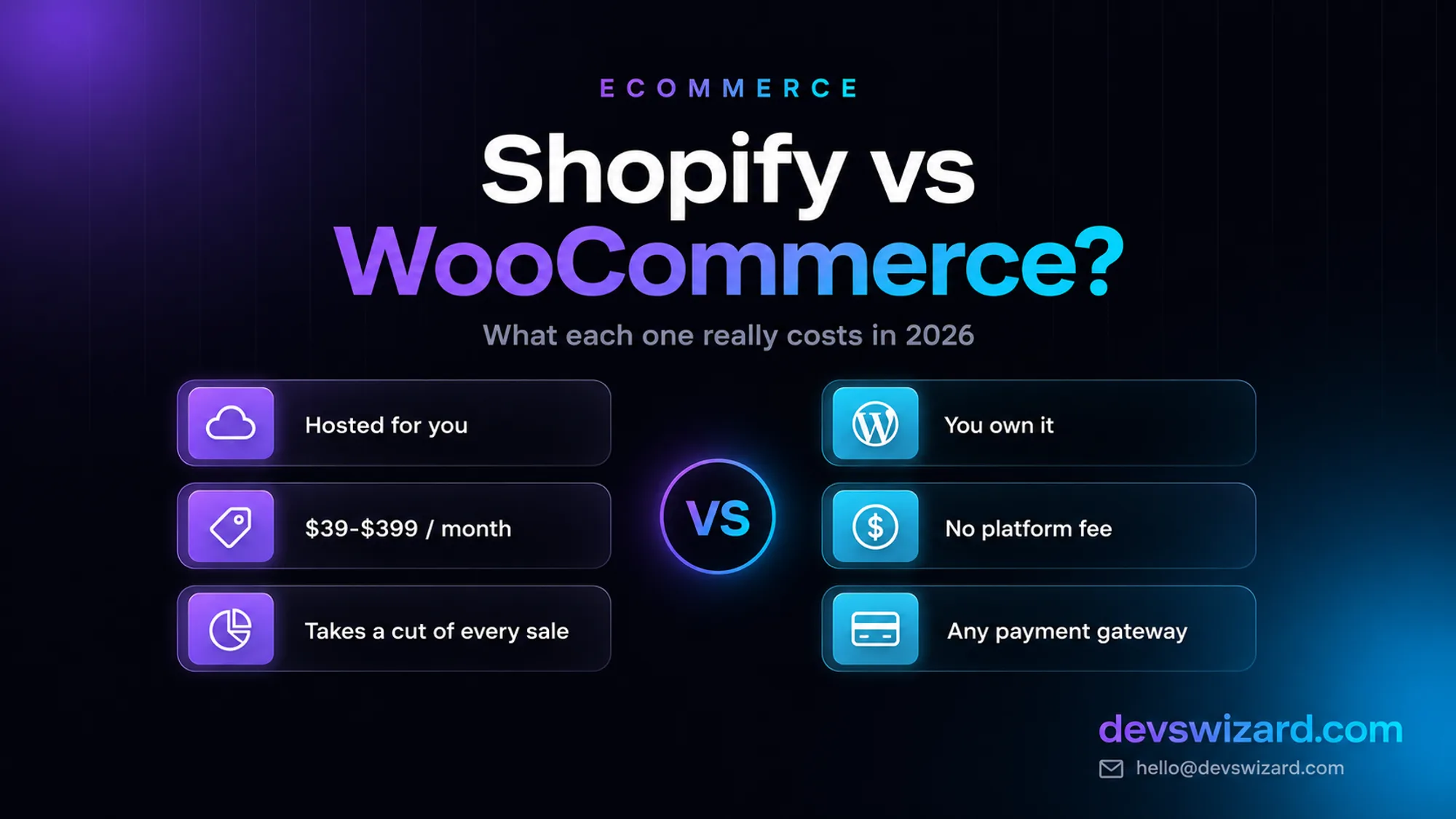
Someone decides to sell online, reads for an hour, and lands where everyone lands: Shopify vs WooCommerce. One camp says Shopify because it simply works. The other says WooCommerce because you own it and pay no platform cut. Both are right about their own store and neither has seen yours.
The short answer: Shopify if you want to be selling within weeks and nobody on your side will own updates. WooCommerce if you are already on WordPress, need local payment gateways, or the checkout has to do something no app covers. Below is what each actually costs — US list prices, July 2026.
Shopify is rented software. Shopify owns the servers, the patching, the PCI compliance and the checkout. You get an admin, a theme, an app store, a monthly bill and a cut of every card payment.
You cannot rewrite Shopify's checkout: on Basic, Grow and Advanced you style it and add approved app blocks, and anything deeper needs Plus. For most stores that is fine — Shopify's checkout converts well, and it converts well because they will not let you break it.
WooCommerce is a free plugin that turns a WordPress site into a store. Nothing is rented, and WooCommerce itself takes no cut of your sales at all — no monthly fee, no per-order fee, no percentage. The only card fee you pay is your payment gateway's own rate, exactly as if you had taken that card anywhere else.
WooCommerce is not automatically cheaper — it moves cost from a subscription to hosting plus labour. What it does is cap the part that grows with your revenue, and hand you the code and the checkout for the day the store has to do something nobody built an app for.
You want to be selling this month. A Shopify store with a customised theme goes live in three to four weeks, and hosting, SSL and PCI paperwork are never your problem.
Nobody on your side will own updates. WooCommerce's ownership advantage becomes a liability the moment nobody is responsible for it. Shopify patches it for you inside the monthly fee.
Your business is registered in a Shopify Payments country. That is 39 of them — the US, Canada, the UK, most of the EU, Australia, Japan, Singapore, Mexico and a few more. Outside the list, you pay a surcharge.
Your catalogue and flow are ordinary. Physical products, standard shipping, discount codes — all out of the box.
You are already on WordPress. The store becomes part of the site you have, not a second system to keep in sync. Still choosing the foundation? CMS or custom website comes first.
Shopify Payments does not cover your country. India, the UAE, Saudi Arabia, Bangladesh, most of Africa and much of Latin America are all outside it.
The checkout has to do something unusual. We built a gift-card system for Drive7, a luxury car care brand in Saudi Arabia: an Arabic right-to-left flow, unique codes, PDF vouchers, delivery by WhatsApp or SMS on the buyer's chosen date, and a staff dashboard for redeeming codes in branch. Two weeks, on the store's existing checkout, so Tamara, Tabby and Ottu payments kept working. On Shopify that is an app subscription if an app fits, and a dead end if it does not.
Content is how people find you. If your traffic comes from articles and guides, WordPress is still the better publishing tool.
| Factor | Shopify | WooCommerce |
|---|---|---|
| Platform cost | $39–$399/month, or $2,300+ on Plus | $0 — you pay for hosting only |
| Cut of your sales | Card rate 2.15%–2.9% + 30¢ | None from WooCommerce; your gateway's rate only |
| Using another gateway | Costs 0.2%–2% extra per order | No penalty |
| Add-ons | Paid apps, mostly monthly | Mostly free plugins; paid ones optional |
| Who patches it | Shopify | You, or whoever you pay |
| Checkout control | Limited; deep changes need Plus | Full — it is your code |
| Where it goes wrong | Fees at scale, walls you cannot move | Neglect — an unmaintained store |
Neither column wins — they fail in different directions, and the question is which failure you would survive.
Plan fees and card rates are published US list prices — Shopify, WooPayments, July 2026. Hosting estimated, Shopify billed yearly.
$10,000 a month, 200 orders a month:
| Line | Shopify Basic | WooCommerce |
|---|---|---|
| Plan or hosting | $348 | under $200 |
| Add-ons | free apps, or $50–$300/month | free plugins |
| Card fees on $120,000 | $4,200 (2.9% + 30¢) | $4,200 at the same rate, less on a local gateway |
| Maintenance | in the plan | your hours, or $4,200 on a $350/month retainer |
| Year one | ≈ $4,550 | ≈ $4,400, or $8,600 maintained |
Within $150 of each other — card fees are most of both columns, and the difference is who does the work.
$100,000 a month, 2,000 orders a month:
| Line | Shopify Grow | WooCommerce |
|---|---|---|
| Plan or hosting | $948 | $1,800 |
| Card fees on $1.2m | $39,600 (2.7% + 30¢) | $42,000 at 2.9%, or $34,800 at a negotiated 2.3% |
| Maintenance | in the plan | $9,000 on a $750/month retainer |
| Per year | ≈ $40,500 | ≈ $52,800, or $45,600 at 2.3% |
Shopify wins on card rate at this size — WooCommerce only overtakes it below roughly 1.9%. Inside a Shopify Payments country, the case for WooCommerce here is control, not cost. Outside those countries the maths inverts.
Take payments on Shopify through anything other than Shopify Payments and Shopify adds a fee on top of your gateway's: 2% on Basic, 1% on Grow, 0.6% on Advanced, 0.2% on Plus.
Registered outside those 39 countries, that is unavoidable. A Saudi store doing $30,000 a month on Basic pays $600 a month, $7,200 a year, on top of what Tap or Ottu already charge — a WooCommerce build paid for in year one, every year.
Inside supported countries it means you cannot shop around for card rates: the moment an acquirer would offer 2.3%, the surcharge cancels the saving. On WooCommerce, negotiating your rate is simply allowed.
Either platform will sit behind a Next.js storefront on its API — fast and fully custom, with something proven still handling orders and payments. It costs more and is right far less often than its sellers suggest. Outgrow both, and marketplaces or commission splits are custom application territory.
First store, Shopify Payments available, nobody in-house maintaining anything → Shopify. Start on Basic, move to Grow past about $25,000 a month on yearly billing.
Already on WordPress, outside Shopify Payments, or the checkout has to behave in a way no app covers → WooCommerce, with someone named responsible for updates from day one.
Over $1m a year → get card rates quoted first; the acquirer matters more than the platform.
Most of the store work we do is WooCommerce, because most of our clients are already on WordPress or sell from countries Shopify Payments does not reach. We charge $800–$2,500 for a straightforward store and $2,500–$8,000 for a bigger one either way, so we have no reason to push you. For a straight answer on your catalogue and country, tell us what you are selling.
No. Nothing per order, nothing per month. Whatever is deducted comes from your payment gateway — Stripe, PayPal, WooPayments or a local provider — and you would pay that rate on any platform.
The plugin is, and so are the extensions most stores need. What costs money is hosting — under $200 a year to start — plus your hours or a retainer to keep it patched.
Shopify by default; a well-built WooCommerce store on good hosting beats it. Build quality decides this more than the platform does.
The stores still growing in year three are rarely the ones that picked the cleverer platform. They are the ones where the checkout is short, the pages are fast, and somebody is responsible for the thing every month.
Tell us what you are building. We reply within 24 hours — no sales team, no follow-up sequence.
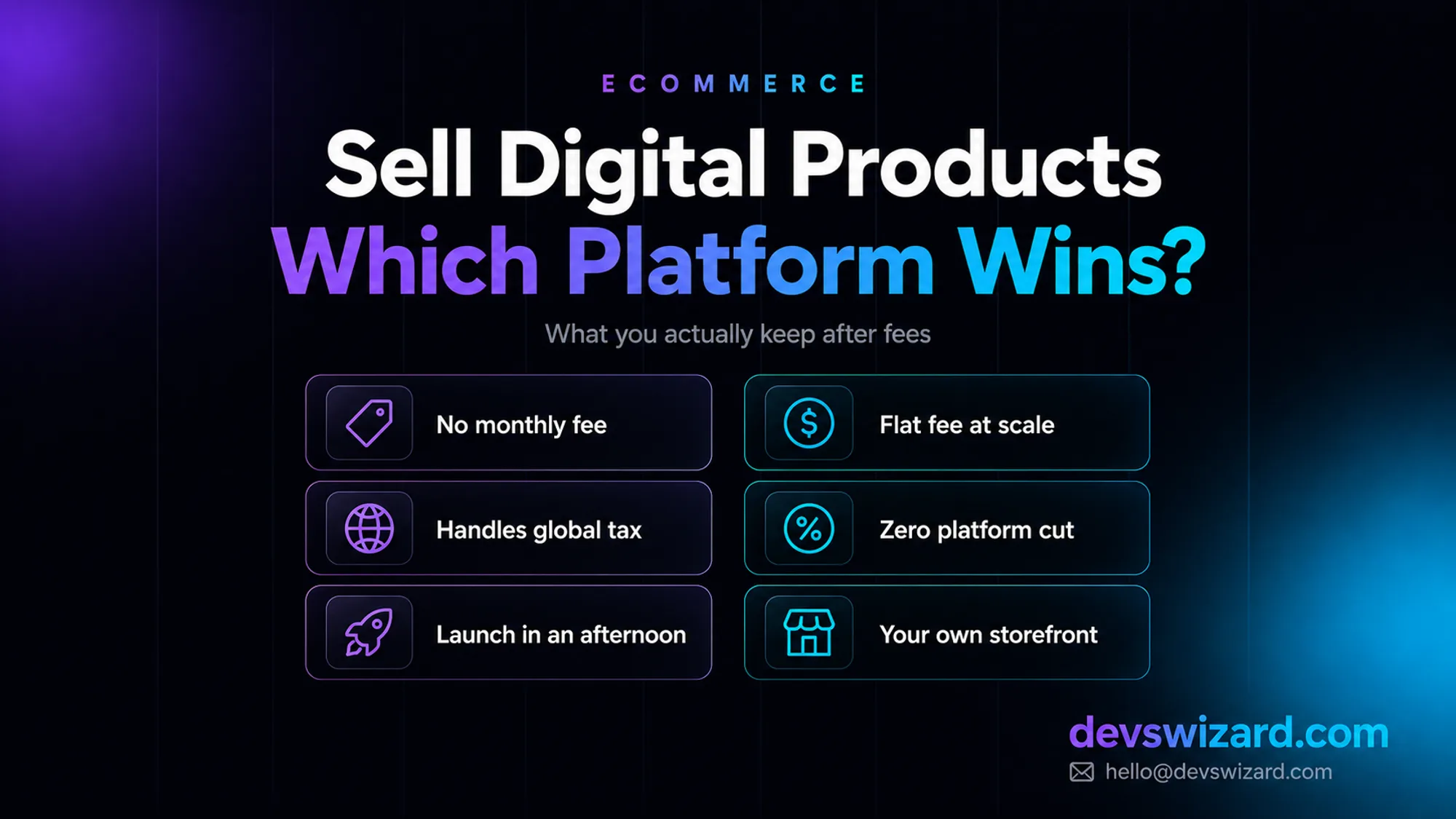
Gumroad takes 10% and Lemon Squeezy roughly 5%, both with no monthly fee; Sellfy and Podia flip that to a $29–$150 monthly charge with 0% cut. What you actually keep on a $79 sale, once a month and at $5,000 a month, decides which one is worth it.

RAG answers from your content at query time for around $35–$70 a month; fine-tuning bakes knowledge into the model and isn't even offered as a self-serve option on Claude. What your business actually needs, and why it's usually not what you'd guess.
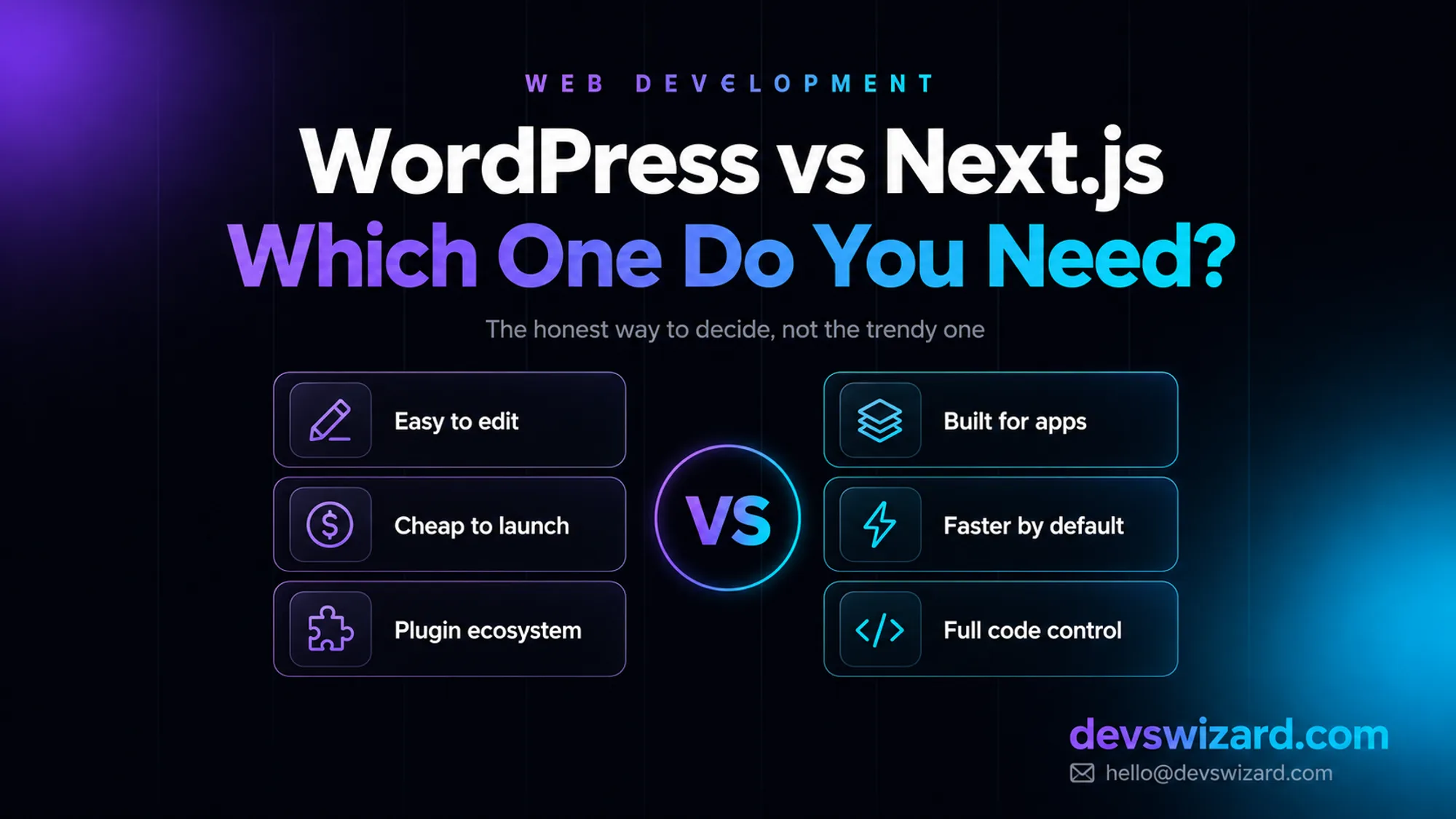
A gym owner asked for a Next.js site because it looked modern on Twitter. What he actually needed was a $500–$7,500 WordPress site for the marketing pages, plus one thing WordPress could never do well.