

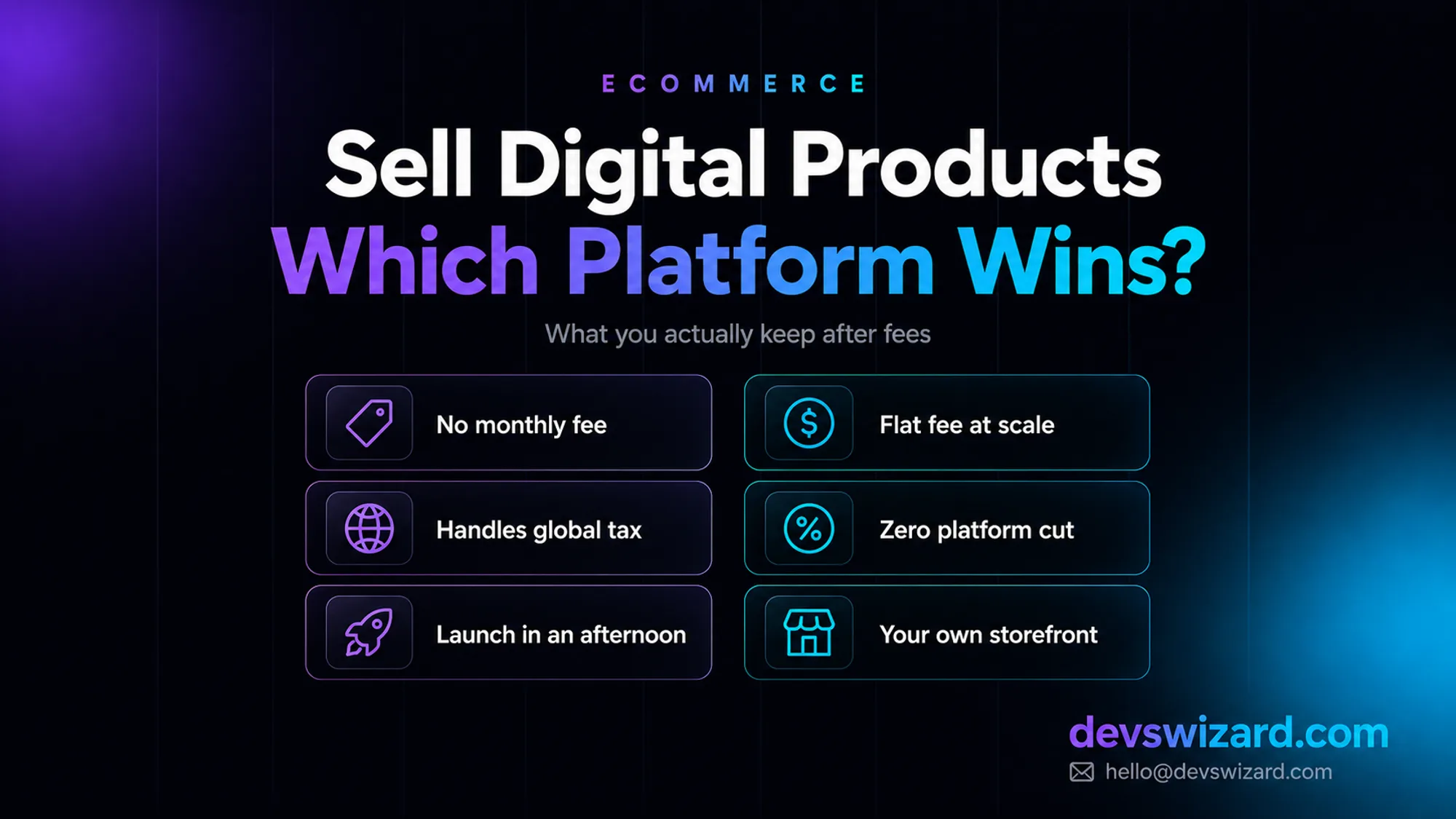
"I've got a $79 Notion template pack ready. Just tell me which platform to use."
That was the whole brief from a client who had spent weeks building the product and about four minutes thinking about where to sell it. Fair enough — the platform feels like the boring part. It is also the part that quietly decides how much of that $79 she actually keeps, and whether the site she already had counted for anything.
We asked her three things before answering: how many sales a month did she expect, did she already have a website, and did she plan to sell to people outside her own country. The answers to those three questions are what actually choose the platform — not which one has the nicest checkout page.
How many sales you expect a month. Every platform on this list charges you one of two ways: a percentage of each sale with no monthly fee, or a flat monthly fee with a lower (or zero) percentage. Low volume, the percentage model wins. Past a certain number of sales, the flat fee gets cheaper — often by a wide margin.
Whether you already have a website. If you already run a WordPress site, adding a self-hosted digital-downloads plugin costs less and keeps everything in one admin. Starting from nothing, a hosted platform gets you selling in an afternoon.
Who you're selling to. Selling to the US and EU means dealing with sales tax and VAT in dozens of jurisdictions. Some platforms handle this for you as the "merchant of record" — they charge more per sale, and it is worth every cent once you have customers in dozens of countries.
Fees as published, August 2026.
One sale a month (early days, testing the product):
| Platform | Fee on this sale | You keep |
|---|---|---|
| Gumroad | $8.40 | $70.60 |
| Lemon Squeezy | $4.45 | $74.55 |
| Payhip (free plan) | $6.54 | $72.46 |
| Sellfy (Starter, $29/mo) | $31.59 | $47.41 |
| Self-hosted (EDD, ~$15/mo hosting) | $17.59 | $61.41 |
Roughly 63 sales a month, ~$5,000 in revenue:
| Platform | Monthly fees + cut | Effective rate |
|---|---|---|
| Gumroad | $531.50 | 10.6% |
| Lemon Squeezy | $281.50 | 5.6% |
| Payhip (Pro, $99/mo) | $262.90 | 5.3% |
| Sellfy (Premium, $119/mo) | $282.90 | 5.7% |
| Self-hosted (EDD + hosting) | ~$190.50 | 3.8% |
The flat-fee and self-hosted platforms only get cheap once volume shows up. At one sale a month, Sellfy's $29 subscription costs more than the sale itself — the flat-fee model punishes you for launching before it rewards you for scaling.
Just launching, unsure it will sell → Gumroad or Lemon Squeezy. No monthly fee means a slow month costs you nothing beyond the transaction itself.
Selling worldwide from day one → Lemon Squeezy. The merchant-of-record model is worth its higher per-sale cut the first time a customer in Germany asks for a VAT invoice you would otherwise have to generate yourself.
Already doing solid, predictable volume → Payhip Pro or a self-hosted setup. The flat fee stops being a risk once you know it is comfortably smaller than the percentage it replaces.
Courses or a membership, not a single download → Podia. It is priced and built for ongoing content, and the higher tiers earn their keep once you are not just delivering one file and disappearing.
You already have a WordPress site with traffic → self-hosted with Easy Digital Downloads. Zero platform cut, one login, and the product sits next to the content that is already bringing people to the site.
Our client's numbers made the call for her: an existing WordPress blog with steady traffic, customers she expected worldwide, and no idea yet how many sales a month to expect. We put her on Lemon Squeezy first — no monthly risk while she found out if the product sold, tax handled automatically for the international buyers her blog already attracted — with a plan to move the product onto her own WordPress site with Easy Digital Downloads once volume was steady enough to make the flat cost worth it.
If your product outgrows every option here — a marketplace with multiple sellers, licensing tied to your own software, a membership tier none of these platforms model correctly — that is custom application territory, and worth a proper conversation before you keep bending a platform to fit.
Not sure which bucket your product falls into? Tell us what you're selling and roughly how many buyers you expect and we'll give you a straight answer, platform included.
Tell us what you are building. We reply within 24 hours — no sales team, no follow-up sequence.
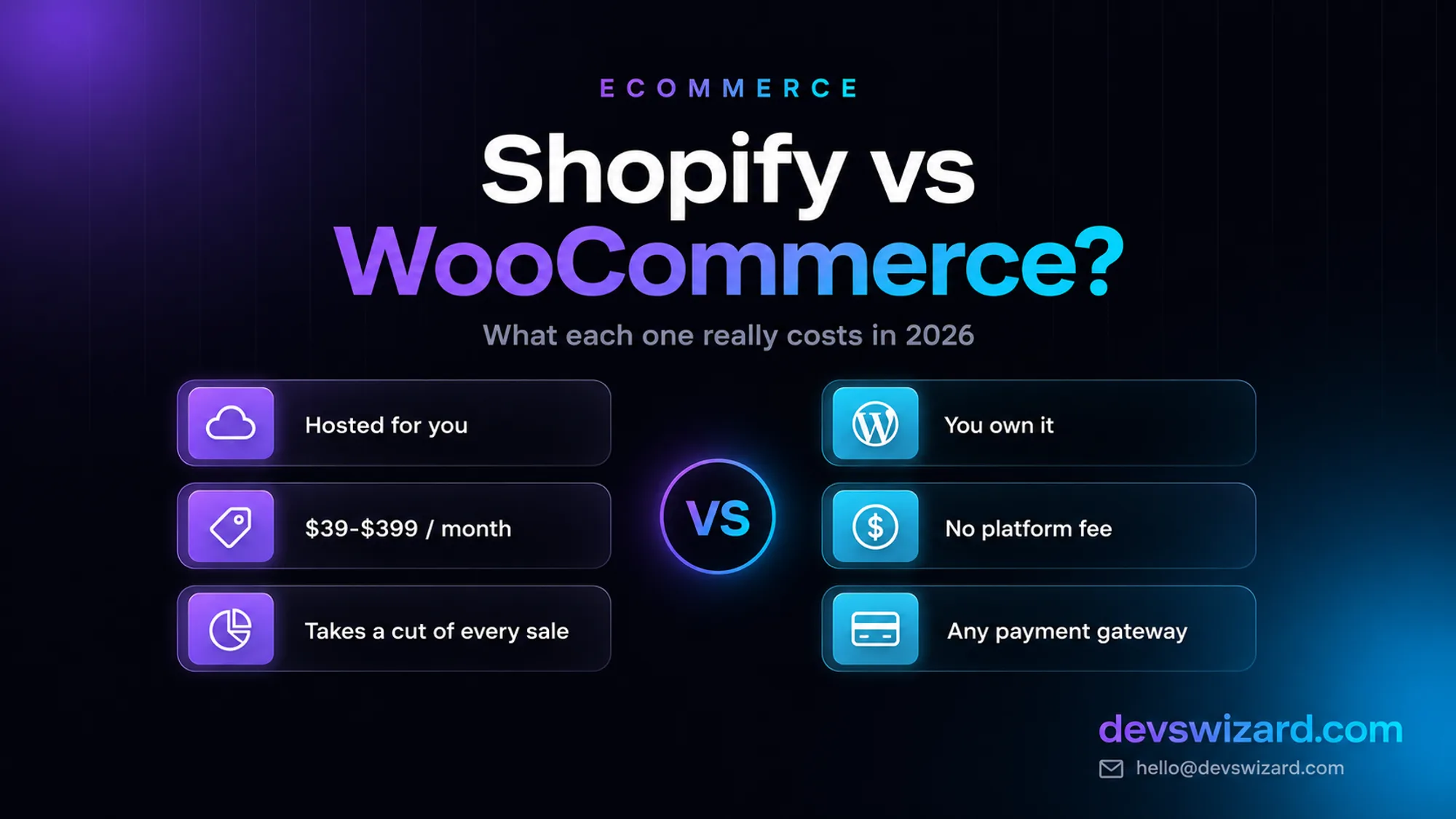
Shopify takes $39–$399 a month plus a cut of every order; WooCommerce takes nothing but needs somebody to run it. What each actually costs at $10,000 and $100,000 a month — and the 2% surcharge that decides it outside 39 countries.

RAG answers from your content at query time for around $35–$70 a month; fine-tuning bakes knowledge into the model and isn't even offered as a self-serve option on Claude. What your business actually needs, and why it's usually not what you'd guess.
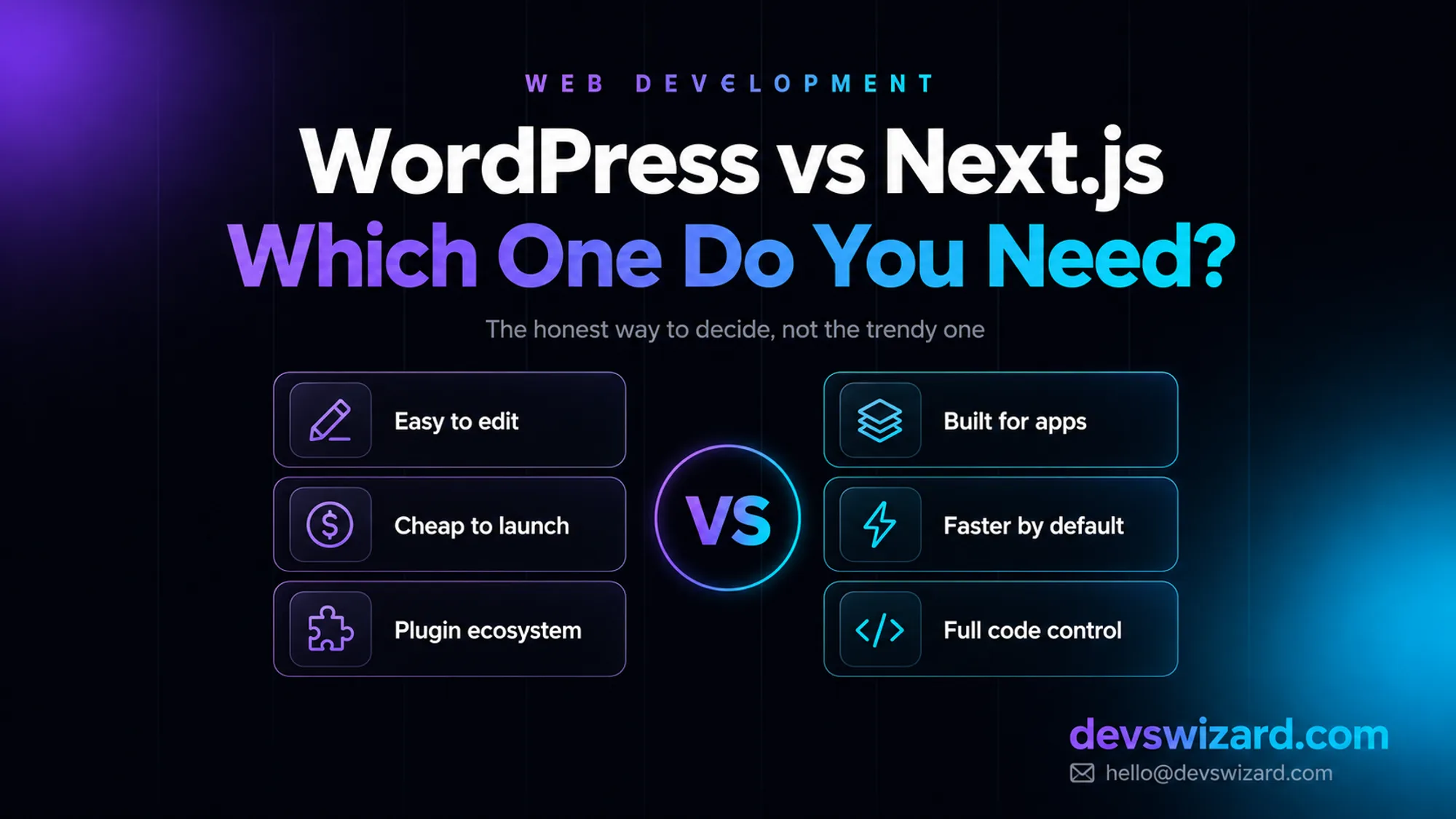
A gym owner asked for a Next.js site because it looked modern on Twitter. What he actually needed was a $500–$7,500 WordPress site for the marketing pages, plus one thing WordPress could never do well.